Fumaça passiva e de terceira mão: o verdadeiro dano à sua família e filhos
Fumaça passiva e de terceira mão: o verdadeiro dano à sua família e filhos
Quando alguém fuma em casa, as três consolações mais comuns são: "Vou fumar na varanda", "A janela está aberta" e "A fumaça já se dispersou, as crianças não sentem". Para os adultos, isso parece um compromisso educado; para as crianças, o que diminui no ar é o "anel de fumaça visível", não necessariamente a exposição nociva.
A fumaça passiva é a fumaça de tabaco ambiental que está sendo produzida e inalada em tempo real; a fumaça de terceira mão é o resíduo que permanece em roupas, sofás, cortinas, bancos de carro e brinquedos após o cigarro se apagar, além dos produtos formados quando esses resíduos continuam a reagir com o ar interno. Este artigo se dirige a leitores com família — especialmente aqueles com crianças — para explicar com clareza os efeitos do tabagismo passivo sobre a cavidade nasal das crianças, as vias aéreas e os riscos relacionados à cognição, bem como a persistência do resíduo de fumaça de terceira mão, e fornecer ações de proteção familiar realmente aplicáveis. Sério, mas sem alarmismo; aborda os riscos e o que você pode fazer agora para proteger sua família.
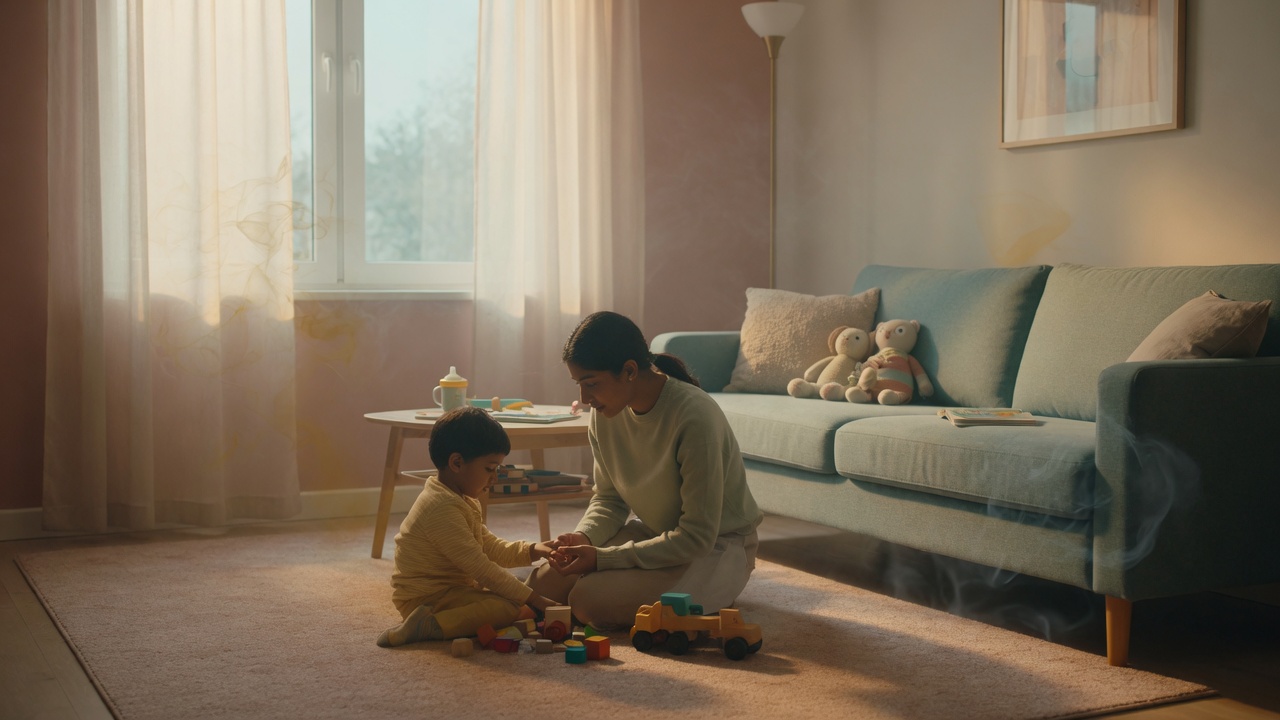
I. Fumaça passiva e de terceira mão: a fumaça se dispersa, mas o risco pode não
Vamos primeiro separar dois conceitos facilmente confundidos.
A fumaça passiva (frequentemente chamada de fumaça de tabaco ambiental) vem principalmente de duas fontes: a fumaça lateral liberada enquanto um cigarro queima mansamente, e os restos de fumaça principal exalados pelo fumante. Ela contém nicotina, monóxido de carbono, material particulado fino, além de grande número de compostos irritantes, oxidantes e relacionados ao risco de câncer. O perfil de componentes se sobrepõe fortemente ao do tabagismo ativo — a diferença costuma ser que a criança não tem escolha, mas respira o mesmo ar.
A fumaça de terceira mão refere-se ao resíduo que permanece adsorvido nas superfícies e na poeira após a fumaça do tabaco se dissipar: nicotina e alcaloides relacionados, precursores e produtos de nitrosaminas específicas do tabaco, hidrocarbonetos aromáticos policíclicos, entre outros. Eles podem aderir a paredes, carpetes, capas de sofá, forros de teto de carro, pelúcias e ser liberados lentamente nas horas, dias ou mais que se seguem; em ambientes internos com ozônio, óxidos de nitrogênio etc., reações químicas secundárias também podem ocorrer, gerando novas substâncias nocivas.
Em uma frase: "não ver fumaça" não significa "sem exposição relacionada ao tabaco". O que uma família realmente precisa gerenciar não é apenas os poucos minutos em que o cigarro está aceso, mas também o ar e as superfícies depois que ele se apaga.
II. Por que as crianças "aguentam" menos que os adultos
Sentadas na mesma sala, as crianças costumam suportar uma carga de dose desproporcional. As razões não são misteriosas, mas costumam ser ignoradas.
1. Relação ventilação/peso mais alta
A ventilação por unidade de peso corporal é maior nas crianças; na mesma concentração no ar, a quantidade inalada ajustada ao peso tende a ser maior.
2. Altura de atividade mais próxima do chão
Bebês e crianças pequenas engatinham e brincam no chão, carpete e bordas de sofá — exatamente a altura onde poeira e resíduos se depositam mais facilmente. Partículas relacionadas à fumaça de terceira mão e substâncias semivoláteis costumam se acumunar nessas interfaces.
3. Via mão-boca mais ativa
Chupar dedos, morder brinquedos, tocar móveis e depois esfregar olhos e nariz são comportamentos normais do desenvolvimento, e facilitam a entrada do resíduo de superfície no organismo por boca e nariz.
4. Barreiras e imunidade ainda em desenvolvimento
A depuração mucociliar nasal, a resposta imune, a barreira hematoencefálica e as conexões do sistema nervoso estão todas em processo de fortalecimento. A irritação crônica durante janelas sensíveis afeta não apenas o "conforto imediato", mas pode também perturbar trajetórias de desenvolvimento.
5. Não podem votar com os pés
Adultos podem sair de um cômodo ou encerrar um encontro; os pequenos não. A essência da exposição domiciliar costuma ser um acúmulo cumulativo, de baixa dose, de longa duração, dia após dia.
Portanto, usar a sensação subjetiva de um adulto ("para mim o cheiro está ok") para inferir a margem de segurança da criança não é confiável.
III. O nariz dá o alarme primeiro: tabagismo passivo e cavidade nasal da criança
O nariz é o posto avançado das vias respiratórias. Material particulado e gases irritantes da fumaça atingem a mucosa nasal primeiro.
1. Mucosa e cílios: o sistema de limpeza é desacelerado
Uma mucosa nasal saudável depende do batimento ciliar e do tapete de muco para transportar poeira, patógenos e partículas para fora. Oxidantes e componentes tóxicos da fumaça do tabaco interferem nesse processo: a atividade ciliar cai, as propriedades do muco mudam, e o microambiente local se torna mais propício a inflamação persistente. O resultado não é "desconforto ocasional", mas mais uma sobreposição de capacidade de limpeza reduzida e irritação persistente.
2. Sintomas nasais comuns em casa
Em ambientes de fumaça passiva de longa duração ou fumaça de terceira mão evidente, as crianças tendem a desenvolver ou agravar:
- Congestão nasal crônica ou recorrente, coriza, coceira nasal;
- "Sempre parece estar resfriada" sem que um único foco infeccioso seja encontrado;
- Respiração bucal noturna, tendência a roncar, sono fragmentado;
- Olfato aumentado ou diminuído (manifesto como seletividade alimentar acentuada, respostas anormais a estímulos de odor, entre outros sinais inespecíficos).
Esses sintomas podem se sobrepor a rinite alérgica, hipertrofia adenoide e irritação de estação seca. O que é astucioso no fator fumaça é que ele raramente assina seu nome, mas costuma acrescentar peso nos bastidores.
3. A via que leva ao ouvido médio
A inflamação nasofaríngea e a disfunção da trompa de Eustáquio são contextos importantes para derrame no ouvido médio e otite média recorrente em crianças. A associação entre tabagismo passivo e problemas de ouvido médio infantil é discutida repetidamente na literatura pediátrica e de saúde pública. Não é preciso culpar a fumaça por cada dor de ouvido, mas se há tabagismo prolongado em casa e você insiste em "será contaminação cruzada na creche", pode estar perdendo um fator ambiental modificável.
4. Atribuição facilmente mascarada
"Mudou de estação", "O ar-condicionado está muito seco", "Alergia a ácaros" — tudo isso pode ser verdade. A exposição à fumaça não é mutuamente exclusiva com essas causas. Uma compreensão mais realista é: terreno alérgico + irritação pela fumaça + secura/infecção empurra a mucosa nasal para um estado mais difícil de recuperar. Retirar a fonte de tabaco do interno primeiro é o passo de menor custo e lógica mais limpa.
IV. Estendendo-se para baixo: infecções respiratórias, asma e desenvolvimento pulmonar
O nariz é apenas a entrada. Partículas e gases da fumaça continuam descendo, afetando laringe, traqueia, brônquios e alvéolos.
1. Infecções e inflamação se instalam mais facilmente
O risco de infecções de vias aéreas inferiores em crianças (como bronquite, pneumonia etc.) é apontado como mais elevado sob exposição à fumaça passiva domiciliar em múltiplos estudos observacionais. A estrutura de mecanismos inclui: enfraquecimento das barreiras mucosas, desregulação imune local e redução da depuração ciliar, facilitando a fixação de patógenos e a amplificação da inflamação.
2. Asma e sibilância: desencadeamento e agravamento
Para crianças que já têm tendência a sibilâr ou asma, a fumaça é um fator de agravamento claro: crises mais frequentes, sintomas mais graves, controle medicamentoso mais difícil. Para crianças ainda não diagnosticadas com asma, a exposição prolongada também pode aumentar a probabilidade de sibilância recorrente. O controle do tabagismo em casa não é "opcional", mas um pilar ambiental do manejo da asma ao lado da evitação de alérgenos e do uso correto da medicação prescrita.
3. Trajetória de desenvolvimento da função pulmonar
A infância é uma fase importante do desenvolvimento das vias aéreas e dos alvéolos. A exposição contínua à fumaça do tabaco pode afetar desfavoravelmente a trajetória de longo prazo dos indicadores de função pulmonar — esse efeito pode não mostrar números alarmantes no exame de hoje, mas pode deixar marcas na tolerância ao exercício ou na hiperreatividade das vias aéreas na adolescência ou na idade adulta. Declarações de saúde pública costumam adotar risco direcional em vez de prometer "X cigarros = Y mililitros a menos". Para os pais, a mensagem suficiente é: a exposição crônica evitável não vale a pena apostar com "parece estar bem por enquanto".
4. Uma nota especial sobre bebês (formulação contida)
Os fatores de risco da Síndrome da Morte Súbita do Lactente (SMSL) são multifatoriais, e guias familiares e de saúde pública geralmente listam evitar o tabagismo na gravidez e a exposição à fumaça passiva pós-natal como medidas de proteção importantes. Esta seção não dramatiza cenários extremos; apenas enfatiza que o quarto e o ambiente de sono do bebê devem buscar ser livres de fumaça e sem contaminação residual grave.
V. Efeitos invisíveis: sinais relacionados à cognição e ao comportamento
Os sintomas respiratórios são visíveis; mudanças de cognição e comportamento costumam ser atribuídas à "personalidade", "tempo de tela" ou "pressão escolar".
1. Por que o sistema nervoso é discutido
A nicotina é uma substância neuroativa, e o cérebro em desenvolvimento é mais sensível a perturbações do sistema colinérgico. A exposição à fumaça passiva significa que a criança pode continuar a absorver baixos níveis de nicotina e seus metabólitos (como a cotinina, detectável em fluidos corporais). Além disso, o monóxido de carbono afeta o suprimento de oxigênio, e o material particulado fino e a inflamação sistêmica de baixo grau também podem afetar o microambiente cerebral por vias indiretas. Isso constitui uma preocupação mecanisticamente razoável, e não um veredicto já escrito.
2. O que a pesquisa sugere
Estudos observacionais e alguns trabalhos de psicologia experimental sugerem que a exposição prolongada à fumaça de tabaco ambiental pode estar associada a problemas de atenção, desvios no desempenho de aprendizado e memória e elevação do risco de certos problemas de comportamento. Por exemplo, estudos comparando não fumantes frequentemente expostos e menos expostos encontraram diferenças entre grupos em tarefas como memória prospectiva. Deve-se enfatizar:
- A maioria das evidências é observacional, com fatores de confusão complexos (condição socioeconômica familiar, estilo educativo dos pais, outros poluentes etc.);
- Correlação não equivale a causalidade simples;
- Mas isso não significa que possa ser ignorado — especialmente quando a exposição pode ser cortada ativamente pela família.
3. Sinais inespecíficos que a família pode notar
O que se segue não pode ser usado para autodiagnóstico, servindo apenas como parte de uma "lista de verificação ambiental":
- Maior dificuldade em manter a atenção na aula ou ao fazer lição;
- Irritabilidade emocional, má qualidade de sono com instabilidade diurna consequente;
- Desempenho de memória e de tarefas executivas ("esquecer o que acabou de ser dito") abaixo do esperado para a idade.
A prioridade permanece: melhorar o sono, manter rotina regular, reduzir a exposição à fumaça e buscar avaliação pediátrica ou profissional quando necessário — em vez de rotular a criança.
VI. Quão "teimosa" é a fumaça de terceira mão: resíduo, reliberação e reações secundárias
A fumaça de terceira mão merece seu próprio capítulo porque atinge as "meias-medidas" mais comuns no controle do tabagismo domiciliar.
1. Adsorção e reliberação
Substâncias semivoláteis como a nicotina sabem se infiltrar em fibras de tecido, espumas de enchimento e poeira. Quando pessoas passam, a temperatura sobe ou a umidade muda, elas podem voltar à zona respiratória. Daí um fenômeno familiar: o cômodo já "não cheira à fumaça acre do cigarro recém-apagado", mas permanece uma sensação de fumaça velha — especialmente em estofados de carro e cortinas de fumantes de longa data.
2. Reações químicas secundárias
Os resíduos não são imutáveis. Eles podem reagir com oxidantes do ar interno, gerando poluentes secundários incluindo nitrosaminas específicas do tabaco. Isso significa: a fumaça de terceira mão não é apenas "cheiro de fumaça velha", mas potencialmente um processo químico lento.
3. Por que a dose é maior para a criança
| Cenário | Adulto | Criança |
|---|---|---|
| Altura de contato | Sobretudo zona respiratória sentada/em pé | Engatinha, deitado, perto das superfícies de deposição |
| Contato mão-boca | Relativamente pouco | Entrada frequente de brinquedos e dedos na boca |
| Metabolismo e desintoxicação | Relativamente maduro | Ainda em desenvolvimento |
| Capacidade de sair | Pode sair por conta própria | Depende da decisão do cuidador |
Alguns estudos e materiais de divulgação indicam que, nas mesmas condições ambientais, o dano relativo da fumaça de terceira mão para crianças pode ser significativamente maior do que para adultos (a declaração de ordem de grandeza varia conforme o delineamento do estudo, e este artigo não a fixa como mito de fator único). Uma conclusão mais prudente é: o mesmo sofá não é a mesma exposição para uma criança que engatinha e para um adulto em pé.
4. Desmontando algumas práticas "aparentemente razoáveis"
- Fumar só na varanda: A fumaça ainda pode refluir; roupas e cabelo já adsorveram resíduo, virando fonte de poluição móvel ao voltar para dentro.
- Abrir a janela dez minutos: Ajuda a diluir as massas de fumaça passiva, mas faz pouco pela fumaça de terceira mão já infiltrada em tecidos e poeira.
- Pegar a criança só depois de fumar: Reduz "soprar fumaça no rosto", mas pode entregar o resíduo da roupa direto à zona respiratória e à pele do bebê.
- Só trocar o casaco: Ajuda, mas não equivale a descontaminação completa; cabelo, pele, espaços entre os dedos e superfícies internas permanecem.
VII. Lista de verificação familiar e acionável para ambiente sem fumaça e sem resíduo
O objetivo não é a perfeição moral, mas reduzir a dose cumulativa da criança.
1. A camada de regras (mais eficaz)
- Totalmente sem fumaça no interno: Sala, quarto, banheiro, cozinha — sem exceções.
- Carro sem fumaça: Espaço confinado de alta concentração e forte adsorção interna, zona crítica de fumaça de terceira mão.
- Não "demonstrar fumar" diante das crianças: Reduzir imitação e normalização.
- Se alguém fuma ao ar livre: Lavar mãos e rosto ao voltar, trocar de roupa e fazer bochecho se possível, antes do contato próximo com um bebê.
2. A camada de limpeza (dirigida à fumaça de terceira mão)
- Tecidos laváveis: Cortinas, capas de sofá, roupa de cama, capas de almofada, capas de banco de carro — lavagem profunda regular conforme o material.
- Superfícies duras: Mesas, peitoris, pisos, maçanetas limpos com método apropriado (escolher conforme o material da superfície; evitar uso indevido de produtos corrosivos que possam prejudicar crianças).
- Pelúcias e tapetes de engatinhar: Incluí-los no plano de lavagem, em vez de "parece não estar sujo, continuar usando".
- Cômodos fumados por anos: Desodorizantes apenas mascaram, não eliminam; é preciso limpeza + ventilação + troca de tecidos muito adsorventes quando necessário.
- Purificadores de ar (se usados): Escolher filtragem eficaz contra partículas e saber, de forma realista, que ele auxilia a qualidade do ar mas não substitui "não acender cigarro no interno".
3. Socialização e visitas
- Antes de visitar parentes e amigos, saber se fumam no interno; preferir encontros ao ar livre ou encurtar o tempo em cômodos com fumaça.
- Em locais públicos, afastar-se de pontos de fumantes e da pluma de fumaça em portas de elevador.
- Ao buscar na creche ou em atividades pós-escola, observar pontos de aglomeração de fumaça passiva entre o público da busca.
4. Cessação tabágica adulta e apoio (em princípio)
Um pai que para de fumar é o investimento mais cabal na qualidade do ar familiar. Em caso de abstinência intensa ou recaídas repetidas, adultos podem procurar um ambulatório formal de cessação do tabagismo ou, sob orientação médica, avaliar opções de intervenção. Nenhum produto com nicotina deve ser dado a crianças.
5. Quando procurar médico (não substitui diagnóstico e tratamento)
Situações que justificam contato rápido com pediatra ou otorrino incluem, mas não se limitam a:
- Sibilância recorrente, respiração rápida ou impacto evidente na alimentação ou atividade;
- Otite média frequente ou suspeita de diminuição da audição;
- Congestão nasal grave afetando sono e indicadores relacionados ao crescimento;
- Preocupações persistentes dos pais sobre atenção ou marcos de desenvolvimento.
Dificuldade para respirar, lábios roxos, alteração da consciência, estridor grave ou febre alta com prostração devem motivar atendimento de emergência.
VIII. Conclusão: Escreva a proteção nas regras de casa, não na culpa
A fumaça passiva prejudica quem compartilha o ar neste momento; a fumaça de terceira mão prejudica quem ainda mora nesta casa "depois que o cigarro se apagou". Para a criança, o nariz costuma dar o alarme primeiro, as vias aéreas pagam a conta em seguida, e os riscos cognitivos e comportamentais são mais ocultos, exigindo melhoria ambiental de longo prazo para contrabalançar.
Se você é um pai que fuma: não se trata de condená-lo, mas de devolver-lhe a escolha — você pode decidir se o ar de casa continuará tingido de resíduo de tabaco.
Se você é um cuidador não fumante: sua insistência não é "exagero", mas luta por uma exposição mensuravelmente menor para a criança.
O dia em que a regra de casa sem fumaça entra nas normas domésticas é mais útil do que o dia em que entra numa postagem ansiosa nas redes sociais. A fumaça se dispersa, e o risco pode se dispersar com ela — desde que reconheçamos que o resíduo é real e estejamos dispostos a limpá-lo.
Resumo rápido do artigo
- A fumaça passiva é a fumaça de tabaco ambiental sendo inalada em tempo real; a fumaça de terceira mão é o resíduo que permanece adsorvido nas superfícies após o cigarro se apagar e pode ser reliberada ou até sofrer reações secundárias.
- As crianças costumam ser mais sensíveis à mesma exposição devido à relação ventilação/peso, à atividade ao nível do chão, à via mão-boca e às barreiras em desenvolvimento.
- O tabagismo passivo pode irritar a mucosa nasal e os cílios, agravar congestão, coriza e desconforto respiratório alto recorrente, e está direcionalmente associado a problemas de ouvido médio.
- Infecções de vias aéreas inferiores, desencadeamento/agravamento de asma e trajetórias de desenvolvimento da função pulmonar são as preocupações centrais no nível das vias aéreas.
- Os efeitos cognitivos e relacionados à atenção são sobretudo sugeridos por evidência observacional, a não absolutizar, mas suficientes para apoiar uma decisão familiar de "evitar quando possível".
- Abrir janelas, fumar na varanda e pegar a criança só depois de fumar não resolvem completamente a fumaça de terceira mão; é preciso regras sem fumaça mais limpeza de superfícies e tecidos.
- Carros e cômodos fumados por longo tempo são zonas críticas de resíduo; desodorizantes não substituem a remoção.
- Proteger as crianças depende de regras domésticas acionáveis e de bom senso sobre quando procurar atendimento — não de vergonha, nem de sorte.