Technical Parameter Comparison of Tobacco Leaf Fermentation in Cuba, Dominican Republic, Nicaragua, and Honduras
Introduction: The Second Life of Tobacco Leaves
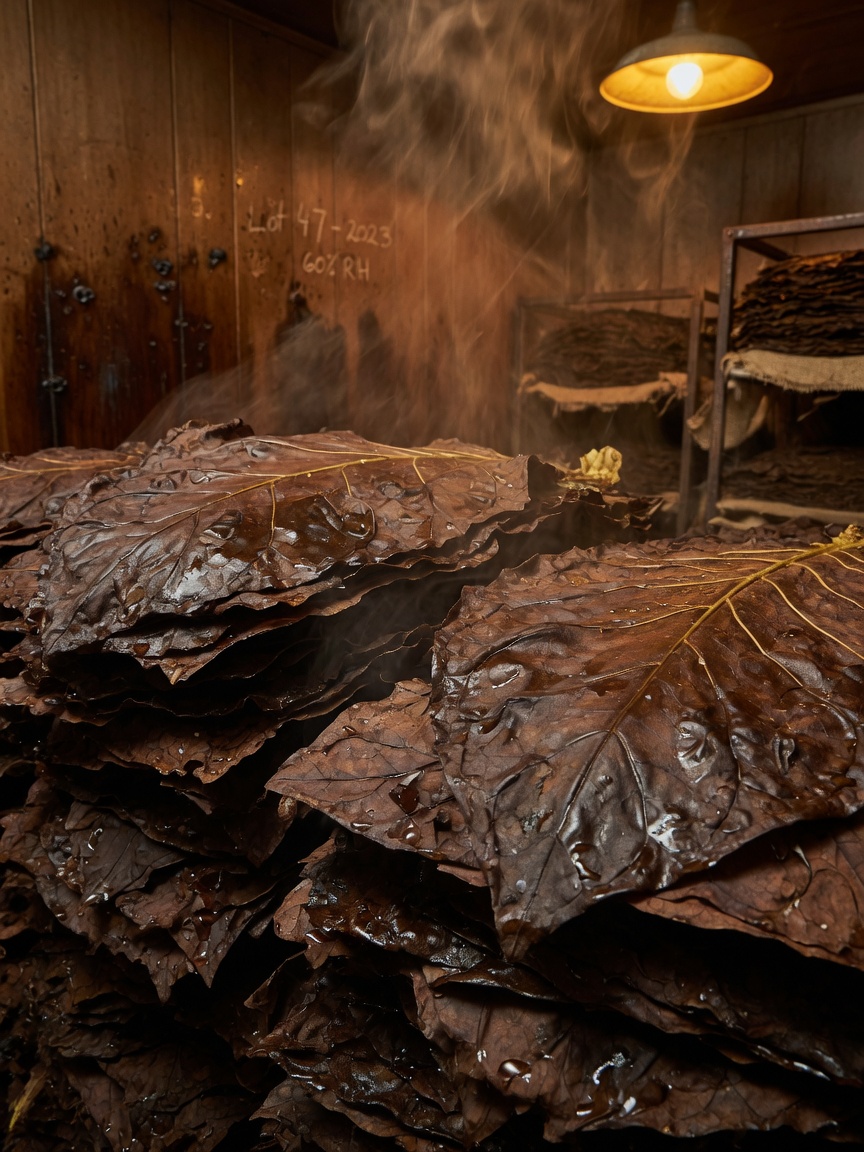
In the long chain of tobacco processing, drying is only initial dehydration, while fermentation — the process commonly known as “aging” — is the true turning point that determines the soul of a cigar. As a practitioner who has spent decades in fermentation rooms, I know deeply that tobacco leaves are not merely stacks of plant fibers; they are complex containers for biochemical reactions.
Fermentation is not just a rise in temperature; it is the conversion of sugars into organic acids, the degradation of proteins into amino acids, and the reconstruction of various volatile aroma compounds (such as terpenes and esters). The soil composition, climatic conditions, and the physical-chemical properties of the leaves themselves (oil content, thickness, sugar content) determine that each leaf requires a completely different “thermodynamic prescription.”
Cuba: Thermodynamic Balance and Traditional Stacking Process
Cuban tobacco fermentation is a classic example of the “traditional power school.” In factories around Havana, you can still see two core stacking modes: pilones (small stacks) and burros (large stacks).
2.1 Thermal Effect Differences from Scale
Pilones are typically used for delicate wrappers or small batches of special varieties, with relatively easier heat dissipation and higher temperature control precision. Burros, on the other hand, are massive stacks reaching several meters in height, generating enormous internal heat. In the center of a burro, heat continuously accumulates through biochemical reactions; without effective ventilation or moisture regulation, the core temperature can quickly spiral out of control.
2.2 The Strict Gradient of Two-Stage Fermentation
The core of Cuban fermentation lies in its unique two-stage thermodynamic curve:
2.3 Walking the Edge of “Burning” Risk
What Cuban masters fear most is “burning the leaf.” Once the core temperature exceeds 55°C or even reaches 60°C or above, the oils in the leaves undergo oxidative deterioration, and the originally mellow aroma instantly turns into a burnt bitter smell or a pungent sensation similar to burnt paper. This damage is irreversible; once it occurs, the entire batch of leaves is reduced to inferior raw material.
Dominican Republic: Gentle Segmentation and Oil Protection Logic
Unlike Cuba's aggressive fermentation style, the Dominican philosophy is “gentle carving.” Dominican tobacco leaves (especially varieties used for light, creamy cigars) focus more on protecting their natural volatile aroma oils.
3.1 “Slow” Driven Aroma Preservation
The fermentation process in the Dominican Republic is typically more fragmented and segmented. We do not pursue extremely high temperature peaks but instead aim for a longer, more stable temperature curve. By controlling lower temperature peaks, we can maximize the retention of esters in the leaves, which are the source of the iconic “creaminess” and “floral notes” of Dominican cigars.
3.2 Coordinated Control of Moisture and Oils
In the Dominican control logic, moisture content carries extremely high weight. If temperature control is appropriate but humidity fluctuates too much, the oils on the leaf surface undergo physical migration, resulting in a dry taste. By maintaining a relatively constant and moderately high humidity environment, we can ensure that the heat generated by fermentation penetrates evenly into the leaf cell walls, achieving a chemical transformation that “moistens things silently.”
Nicaragua: Heavy Bio-Reaction Under Volcanic Soil
If Cuba represents traditional art, then Nicaragua is the battlefield of modern biotechnology. The soil of Nicaragua (especially the Estelí region) is rich in volcanic minerals, producing extremely thick tobacco leaves with astonishing oil content.
4.1 Challenges of High Density and High Oil Content
The physical-chemical properties of Nicaraguan tobacco leaves make them “heavy fuel.” High oil content means that during fermentation, the heat released by biochemical reactions far exceeds that of other growing regions. These leaves have dense cell structures with slower oxygen penetration, easily creating anaerobic conditions deep in the stack, leading to excessive ammonia odors during fermentation.
4.2 Intervention of Modern Sensors
When handling large Nicaraguan tobacco stacks, we no longer rely solely on experience. Modern fermentation facilities embed numerous thermal sensors, oxygen concentration sensors, and humidity sensors deep within the stacks. By monitoring the O2/CO2 ratio in real time at the center of the stack, we can precisely determine the respiratory intensity of the fermentation.
4.3 Pursuit of Depth and Heat
To extract the iconic, highly impactful spiciness and chocolate notes of Nicaraguan tobacco, the fermentation process is typically more prolonged and conducted at higher temperatures. We need deep, long-cycle heat treatment to thoroughly degrade the heavy tannins in the leaves. Although this method demands extremely high technical expertise, once successful, it produces leaves of tremendous power.
Honduras: From High-Temperature Purification to Slow Refinement
The fermentation process in Honduras presents a distinctive “break first, build later” logic.
5.1 Initial High Temperature: Stripping Impurities
The Honduran process typically begins with a relatively intense “high-temperature purification phase.” By maintaining elevated temperatures for a short period, thermal energy accelerates the degradation of those organic impurities that easily produce off-flavors, bitterness, and instability. The goal of this phase is not to generate aroma but to “clear the field” — removing unnecessary chemical interference factors.
5.2 Cooling Transition and Refined Reconstruction
After completing the initial purification, the process quickly transitions into an extremely slow cooling phase. This stage resembles the Dominican style but places greater emphasis on “reconstruction.” As the temperature gradually drops and stabilizes at a low level, the leaves begin to reorganize their molecular structure, forming a cleaner, more layered flavor profile. This “high-start, low-finish” curve allows Honduran tobacco to maintain a certain structure without appearing overly chaotic.
Core Parameter Comparison Matrix
To more intuitively observe the technical differences between growing regions, the following table summarizes their core fermentation parameters:
| Technical Dimension | Cuba | Dominican Rep. | Nicaragua | Honduras |
|---|---|---|---|---|
| **Core Objective** | Balance of traditional flavor and sweetness | Protection of aroma oils and creaminess | Strength, spiciness, and depth development | Impurity stripping and flavor purification |
| **Typical Temperature Curve** | Two-stage: <35°C → 45-55°C | Low peak, long gentle curve | High peak, deep heat cycle | High-temp start → low-temp refining |
| **Temperature Control Logic** | Strictly prevent core “burning” | Extremely fine segmented control | Sensor-driven real-time monitoring | Rapid thermal shock and slow transition |
| **Humidity Control** | Medium-high, maintaining bioactivity | High humidity, ensuring oil stability | Precise control, preventing anaerobic off-odors | Dynamic adjustment with temperature stage |
| **Fermentation Period** | Relatively long (90-150+ days) | Medium to long | Extremely long (deep fermentation) | Medium (emphasis on rhythm) |
| **Leaf Characteristic Match** | Classic, balanced varieties | Light, high-oil, aromatic | Thick, high-density, volcanic mineral feel | Strong structure, needs purification treatment |
Conclusion: The Art of Fire and Air
There has never been a one-size-fits-all formula for fermentation. For an experienced fermentation master, the work is essentially a game played against time, temperature, and microorganisms.
In Cuba, we seek balance within traditional rhythms; in the Dominican Republic, we capture aromas through gentle guardianship; in Nicaragua, we use modern technology to tame the wildness of volcanoes; and in Honduras, we achieve purification through the undulation of heat. Understanding the physical and chemical logic behind these parameters is the only way to truly grasp why every top-tier cigar, before it is lit, has already undergone a baptism of life and death deep within the dark fermentation pile.